 Anacortes
 Siding Built for Life on Fidalgo Island
Fidalgo Island sits surrounded by saltwater on nearly every side — Skagit Bay, Rosario Strait, Guemes Channel, and the Swinomish Channel all wrap around the homes here, and that geography shapes what siding has to survive. A house three miles inland in Mount Vernon deals with a different set of conditions than a house on Fidalgo Island, where salt-laden wind, wind-driven rain, and a long stretch of damp, shaded months all load onto the exterior at once. Siding installation here isn't just a cosmetic upgrade; it's the layer standing between your framing and a climate that doesn't let up for long.
This page covers what siding installation actually requires on Fidalgo Island specifically — the material choice, the installation details that matter in a marine environment, and what our process looks like when we're on your home.
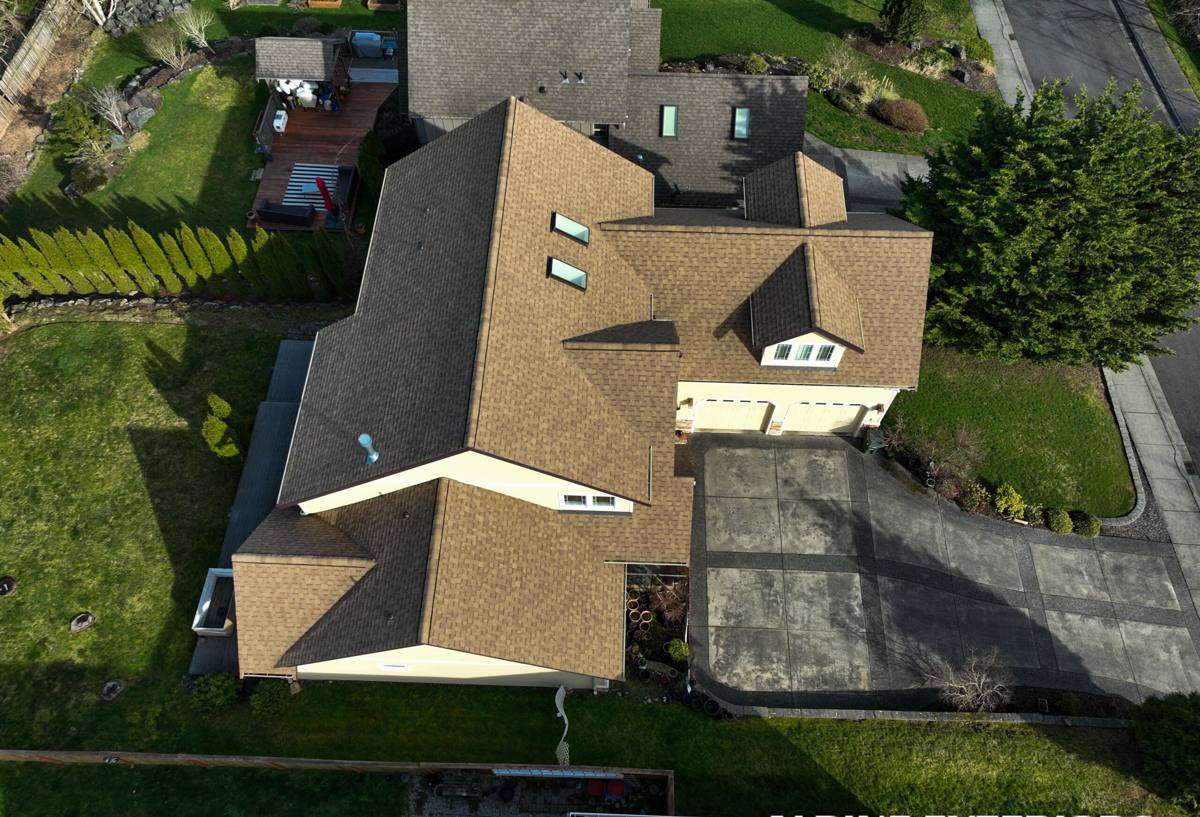
What Fidalgo Island's Climate Does to Siding
Anacortes and the surrounding Skagit County shoreline get a combination of stressors that most inland siding never has to deal with:
Salt Air and Airborne Moisture
Homes close to the water pick up fine salt spray carried on the wind. Over years, that salt exposure accelerates corrosion on exposed metal fasteners, trim edges, and any siding product that relies on paint film alone for protection. It also keeps humidity elevated against exterior walls even on days that aren't technically rainy.
Driving Rain
Storms coming off the Strait of Juan de Fuca and Rosario Strait tend to arrive with real wind behind them, which pushes rain sideways into wall assemblies rather than letting it fall straight down and run off. Siding and flashing details that work fine in a calm rain event can fail under wind-driven rain if laps, seams, and penetrations weren't detailed correctly.
Moss and Prolonged Dampness
Shaded north- and west-facing walls on wooded Fidalgo Island lots often stay damp for weeks at a stretch during fall and winter. That's exactly the environment moss, algae, and mildew need to take hold on a wall surface. Siding that absorbs moisture or has a finish that doesn't resist organic growth will show streaking and staining faster here than almost anywhere else in Skagit County.
None of this means the island is an impossible place to side a house — it means the material and the installation details both have to be chosen with this specific exposure in mind.
Why We Install Only James Hardie Fiber Cement
We install James Hardie siding exclusively, and on Fidalgo Island that's a deliberate choice, not a default. We don't install vinyl, LP SmartSide, Cemplank, Allura, primed spruce, or cedar, and it's worth explaining why in the context of this specific climate:
- Non-combustible core: Hardie's fiber cement composition doesn't feed a fire the way wood-based products can, which matters as much for insurance conversations as for safety.
- Engineered for this climate zone: James Hardie's HZ5 product line is formulated for the cooler, wetter Pacific Northwest climate, with moisture and freeze-thaw performance tuned for exactly the conditions Skagit County sees.
- Factory-applied ColorPlus finish: Rather than relying on job-site paint to hold up against salt air, ColorPlus finish is baked on in a controlled factory process, which gives more consistent, longer-lasting color and moisture resistance than field-applied paint on wood or engineered wood siding.
- Dimensional stability: Fiber cement doesn't swell, warp, or rot the way wood and wood-composite sidings can when they stay damp for weeks under a shaded canopy.
- Transferable warranty backing: A strong manufacturer warranty matters more, not less, in a harsh coastal climate — it's the manufacturer's own statement of confidence in how the product performs under stress.
We're upfront that other products have their advocates and legitimate uses elsewhere. But once you factor in salt air, driving rain, and moss season together, we've made fiber cement our standard and stopped installing the alternatives.
What Correct Installation Actually Involves
The siding product is only half the equation. The other half is installation detail, and this is where a lot of exterior problems actually originate — not from the material failing, but from shortcuts taken during installation that a marine climate exposes faster than a dry inland one would.
Drainage Plane and Rainscreen Gap
Behind the siding, a properly lapped weather-resistant barrier and a ventilated gap give any moisture that does get past the cladding a way to drain and dry out instead of sitting against your sheathing. On a wind-driven-rain coastline like Fidalgo Island, this drainage layer is not optional detailing — it's the difference between a wall that dries out between storms and one that stays chronically damp.
Flashing at Every Penetration
Windows, doors, hose bibs, light fixtures, and vents all interrupt the siding plane, and each one needs flashing that directs water back out rather than into the wall. This is one of the most common places we find prior installation errors when we're re-siding an older Fidalgo Island home.
Fastening and Clearances
James Hardie specifies exact nailing patterns, fastener types, and minimum clearances from grade, roof lines, and decks. Corrosion-resistant fasteners matter more here than in a dry inland town because of the salt exposure discussed above — the wrong fastener can start rusting and staining the face of the siding within a few seasons.
Joint and Seam Treatment
Butt joints, corners, and trim transitions need to be caulked and detailed to shed water, not trap it. Poorly sealed joints are a common entry point for the kind of driving rain this island regularly gets.
Our Installation Process on Fidalgo Island
- On-site assessment: We walk the exterior, check for existing moisture damage, evaluate the current wall assembly, and note wind and sun exposure specific to your lot.
- Tear-off or overlay decision: Most Fidalgo Island homes need a full tear-off to inspect and repair the sheathing underneath, especially on older homes where past siding may have trapped moisture. We'll tell you honestly which your home needs.
- Sheathing repair and moisture barrier installation: Any rot or damage gets addressed before anything new goes up, and the water-resistant barrier and rainscreen gap are installed correctly the first time.
- Flashing and trim details: Every window, door, and penetration gets flashed before siding installation begins.
- James Hardie panel or plank installation: Installed to manufacturer specification for fastening pattern, clearances, and joint treatment.
- Final inspection and cleanup: We walk the finished exterior with you, check every detail against spec, and handle job-site cleanup and disposal.
Cost Factors for Fidalgo Island Siding Projects
Every home is different, but these are the variables that most affect scope and cost on Fidalgo Island specifically:
| Factor | Why It Matters Here |
|---|---|
| Tear-off vs. overlay | Older homes near the water more often need full tear-off to check for hidden moisture damage in the sheathing |
| Wall exposure | Sides facing prevailing wind and rain need extra attention to flashing and drainage detailing |
| Existing damage | Rot or moisture intrusion found once old siding is removed adds repair scope before new siding goes on |
| Home size and complexity | Multiple stories, dormers, and trim details all add labor and material |
| Siding profile chosen | Lap, shingle, and panel James Hardie products have different material and labor costs |
| Site access | Wooded or sloped lots common on the island can affect staging and scaffolding needs |
Signs Your Fidalgo Island Home May Need New Siding
- Persistent moss, algae, or dark streaking that returns shortly after cleaning
- Soft or spongy spots when you press on the siding, especially near the bottom courses
- Visible warping, cupping, or separation at seams and corners
- Peeling or bubbling paint that keeps coming back after repainting
- Rust streaks running down from fasteners or trim
- Rising energy bills that suggest the wall assembly is no longer performing as insulation
- Visible daylight or drafts around window and door trim from the exterior
Why a Fidalgo Island Track Record Matters
A crew that has installed siding across Fidalgo Island and the broader Anacortes area already understands which wall orientations take the worst weather, how local permitting and inspection process works, and what moisture problems tend to show up under older siding here versus siding on a drier inland lot. That familiarity shows up in fewer surprises mid-project and details that are handled right the first time rather than discovered as callbacks. It also means we're not learning this climate on your house — we've already seen what salt air, driving rain, and moss season do to an exterior wall over time, and we install accordingly.
Maintenance After Installation
Correctly installed James Hardie siding is low-maintenance, not no-maintenance. On Fidalgo Island, we recommend:
- An annual visual walk-around, particularly on shaded or wind-exposed walls, to catch moss or staining early
- Gentle rinsing rather than high-pressure washing, which can force water behind laps and trim
- Keeping gutters clear so overflow doesn't run down and saturate wall sections repeatedly
- Prompt attention to any caulking that cracks or pulls away at joints and trim
Done right, this maintenance is minimal, and it's a fraction of what wood or wood-composite siding demands in this same environment.
Get an Honest Look at Your Home
If you're weighing a siding replacement on Fidalgo Island, we're glad to come take a look, walk the exterior with you, and give you a straightforward assessment — no pressure, no inflated urgency. Use the form below to request a free estimate, and we'll talk through what your home actually needs.