 Anacortes
 Why Fidalgo Island Decks Wear Out Faster
Decks on Fidalgo Island live a harder life than decks almost anywhere inland. The combination of salt-laden air off the surrounding water, long stretches of driving rain, and a moss season that can run from fall through spring puts constant stress on wood, fasteners, and finishes. We see it in the same failure patterns over and over on homes around Anacortes: fastener corrosion, soft ledger boards, moss-packed deck boards holding water against the frame, and railings that look fine from a distance but are punky underneath.
None of that means a deck on Fidalgo Island is doomed to rot early. It means the repair has to account for the actual conditions the deck sits in, not just patch what's visibly broken. A deck repaired the same way you'd repair one in a dry inland climate will usually fail again within a few seasons here.
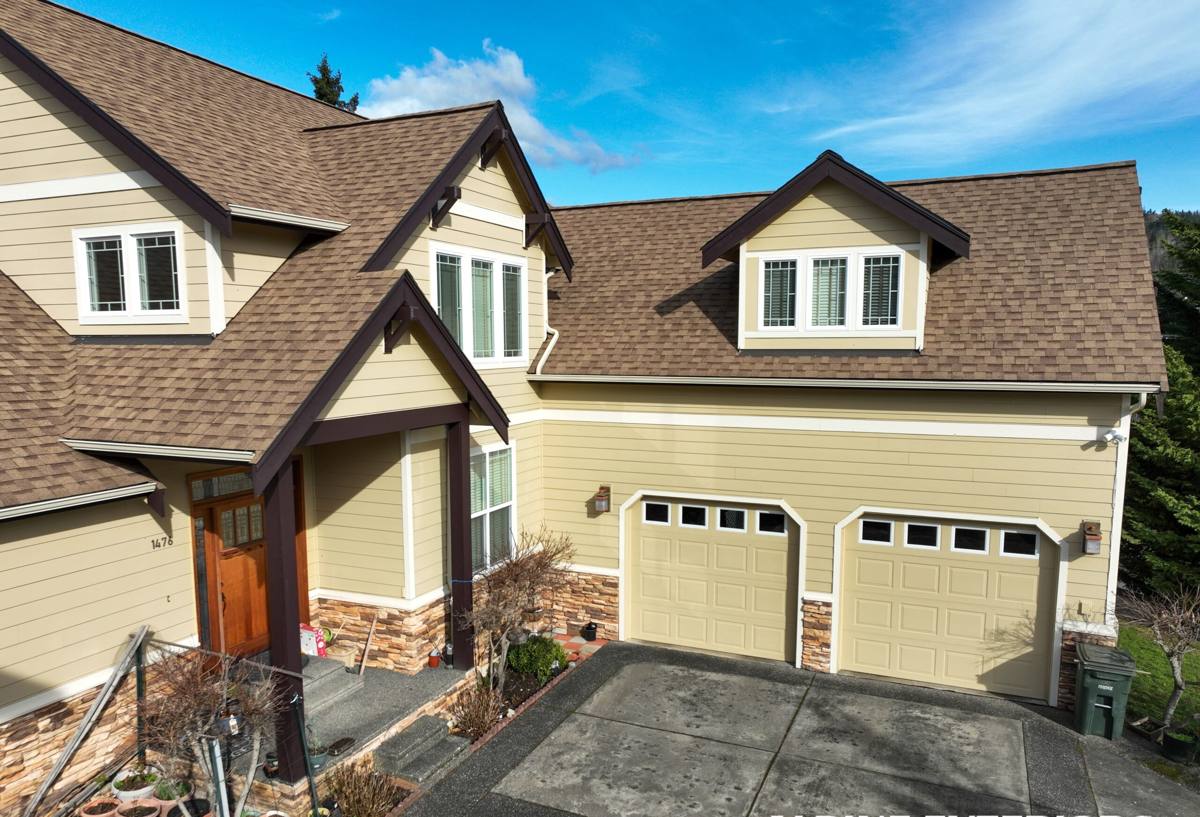
What Skagit County's Climate Actually Does to a Deck
Salt Air and Metal Fasteners
Coastal salt air accelerates corrosion in standard fasteners, joist hangers, and structural screws. Once a fastener starts to rust, it loses holding strength long before it looks obviously bad, and rust stains bleeding through decking are usually a sign the hardware underneath is already compromised.
Driving Rain and Water Intrusion
Wind-driven rain doesn't just fall on a deck, it gets pushed sideways into gaps, under flashing, and behind ledger boards attached to the house. Water that gets trapped instead of draining is what turns a cosmetic issue into a structural one.
Moss and Trapped Moisture
A long moss season means moss and algae can establish on deck boards, stairs, and railings for months at a time. Beyond being slippery, moss holds moisture against the wood surface almost continuously, which is exactly the condition that leads to soft spots and rot.
Signs Your Deck Needs Repair
Most deck problems on Fidalgo Island show themselves in specific, checkable ways before they become dangerous. A quick self-check can tell you whether it's time to call someone:
- Deck boards that feel spongy, bounce, or flex underfoot
- Visible gaps, cracking, or cupping in individual boards
- Rust streaks running down from screws, bolts, or joist hangers
- A railing that wiggles or feels less solid than it used to
- Moss or dark staining that keeps coming back even after cleaning
- Soft or discolored wood where the deck ledger meets the house
- Stairs that feel uneven, loose, or have visible gaps at the stringers
- Standing water that doesn't drain off the deck surface within an hour or two after rain
Any one of these on its own might be minor. Several at once, especially near the ledger board or support posts, usually means the frame needs a closer look, not just the surface.
What a Correct Deck Repair Actually Involves
A repair that holds up on Fidalgo Island starts below the decking, not on top of it. We look at the structure first, because replacing boards over a compromised frame just hides the real problem for another season or two.
Structural Inspection
This means checking the ledger board attachment to the house, probing joists and beams for soft or rotted wood, and checking posts and footings for movement or rot at ground contact. Anywhere water has been sitting or draining poorly is a priority check.
Flashing and Water Management
Proper flashing at the ledger board is one of the most common things missing or failed on older decks in this area. Without it, water tracks directly into the house rim joist, which is a slower but more serious problem than a surface issue. Correcting flashing and making sure water actually sheds away from the house is part of a real repair, not an upsell.
Fasteners and Hardware
Given the salt air here, we replace corroded fasteners and hangers with hardware rated for coastal and treated-lumber exposure rather than reusing standard hardware. It costs a little more up front and saves a callback in two years.
Decking and Railings
Once the frame and water management are sound, we address the boards and railings — sistering or replacing damaged joists, swapping rotted or cupped boards, and re-securing or rebuilding railings that no longer meet a solid standard for safety.
Repair vs. Replacement: How We Help You Decide
Not every deck with problems needs to be torn out. The honest answer depends on where the damage is and how much of the structure is still sound. Here's how we generally think about it:
| Factor | Repair Often Makes Sense | Replacement Often Makes Sense |
|---|---|---|
| Frame condition | Joists and posts are solid, damage is localized | Widespread soft or rotted framing |
| Ledger board | Sound, properly flashed or easily corrected | Rotted or improperly attached to the house |
| Decking surface | A portion of boards are cupped, cracked, or stained | Most boards are failing across the whole deck |
| Age of the deck | Newer deck with isolated moisture damage | Older deck already near the end of its service life |
| Budget priorities | Want to extend life affordably now | Want to reconfigure size, layout, or upgrade materials |
We'll always tell you plainly which category your deck falls into. If a full replacement isn't necessary yet, we won't sell you one.
Materials We Work With — and the Trade-Offs
Both wood and composite decking show up throughout Anacortes and the surrounding island, and each has a real trade-off in this climate.
Wood Decking
Pressure-treated and cedar decking are common and can perform well when properly maintained, but they demand more upkeep in a wet, moss-prone climate — periodic cleaning, sealing, and prompt attention to soft spots. We're straightforward with clients that wood repair here is a maintenance commitment, not a one-time fix.
Composite Decking
Composite resists moss growth and moisture absorption better than wood on the surface, which matters given how long moss season runs here. The trade-off is that composite is less forgiving to repair piece-by-piece if a board is damaged, and the substructure underneath still needs the same attention to flashing, framing, and fasteners as a wood deck — composite decking doesn't protect a rotting frame.
Our Standard Either Way
Regardless of decking material, we don't cut corners on the framing, flashing, or fasteners underneath, because that's what actually determines whether a repair lasts through another Skagit County winter.
Our Process for Fidalgo Island Deck Repairs
- Inspection: We check the frame, ledger, posts, footings, and fasteners in addition to the visible decking, and point out anything that's a safety issue versus a cosmetic one.
- Honest scope: You get a clear explanation of what needs repair now, what can wait, and what the real options are — repair, partial replacement, or full rebuild.
- Correct sequence: Structure and water management get fixed before decking and railings, so the repair holds instead of just looking good for a season.
- Coastal-appropriate materials: Fasteners, hangers, and flashing chosen for salt air and sustained moisture exposure, not generic hardware.
- Cleanup and walkthrough: We show you what was done and what to watch for going forward.
Keeping Your Repaired Deck in Good Shape
A well-executed repair still needs some seasonal attention on Fidalgo Island. A few habits go a long way toward avoiding another repair call in a few years:
- Sweep or rinse moss and debris off the deck surface regularly during the wet months rather than letting it sit all winter
- Keep gutters and downspouts near the deck clear so water isn't dumping directly onto it
- Check railings and stair connections once or twice a year for looseness
- Watch for early rust bleed at fasteners and address it before it spreads
- Reseal or refinish wood decking on the schedule appropriate to the product, rather than waiting until it visibly fails
Why Hiring a Crew That Already Works Fidalgo Island Matters
Deck repair advice that works in a dry climate can actively cause problems here. A crew that already works Anacortes and the surrounding Fidalgo Island area knows to check ledger flashing as a matter of course, knows which fasteners hold up against salt air over years rather than months, and isn't guessing at how much moss and moisture exposure a deck in this specific location deals with. That local familiarity shows up in fewer callbacks and a repair that's actually built for the conditions your deck sits in, not a generic fix.
If your deck is showing any of the signs above, or you just want an honest opinion on repair versus replacement, we're happy to take a look. Reach out for a free, no-pressure estimate using the form below.