 Anacortes
 Why Cap Sante Roofs Take a Different Kind of Beating
Cap Sante sits up on the bluff above the marina, which means the homes here catch wind and weather that roofs a mile inland never see. Storms coming off Rosario Strait and Guemes Channel hit this part of Anacortes with a mix of driving rain and salt-laden gusts, and that combination is harder on a roof than either one alone. Salt air accelerates corrosion on fasteners, flashing, and any exposed metal. Wind-driven rain finds every gap a normal rainstorm would never reach. And Skagit County's long, damp shoulder seasons keep roofs wet and shaded long enough for moss to take hold almost every year.
None of that means a Cap Sante roof is doomed to fail early. It means storm damage repair here has to account for exposure that a generic patch job ignores. A repair that would hold up fine in a sheltered inland neighborhood can fail within a season on the bluff if it does not account for wind uplift and salt exposure.
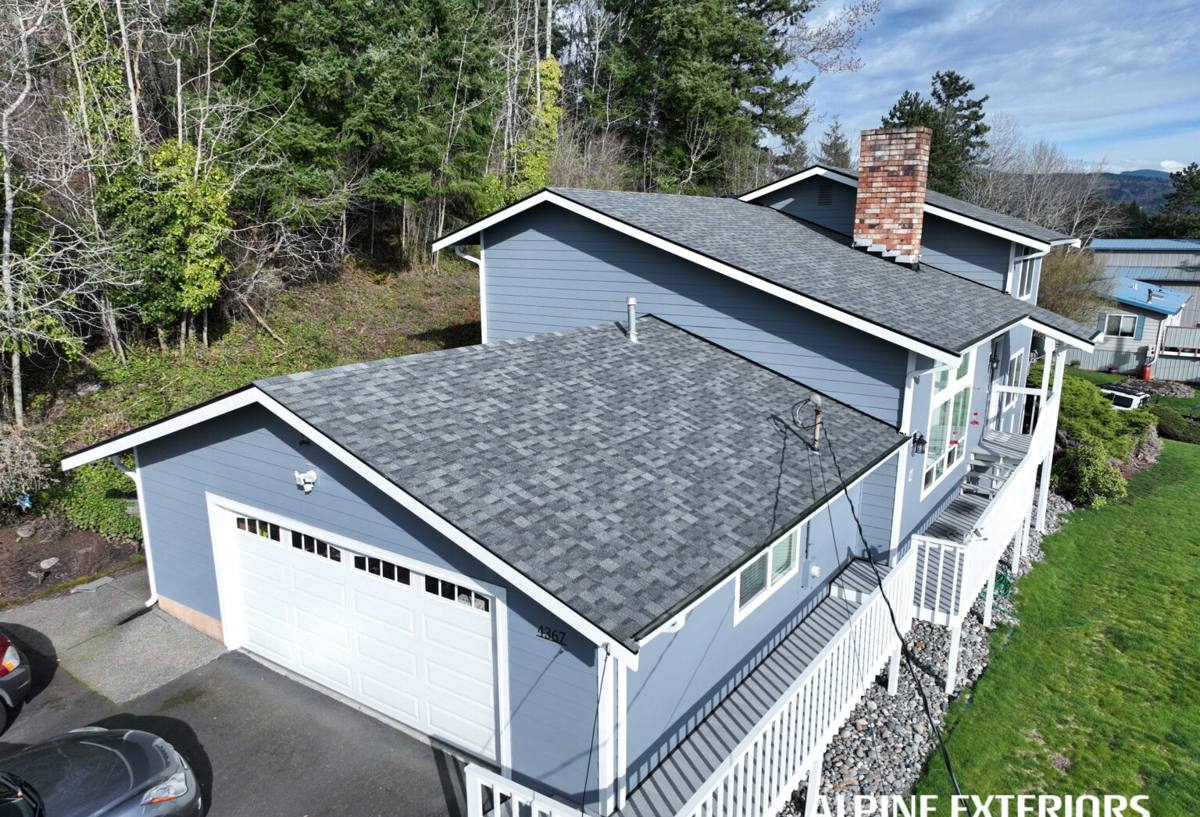
What Counts as Storm Damage on a Cap Sante Roof
"Storm damage" covers more than a tree limb through the roof deck. Most of what we get called out for after a windstorm or a heavy blow off the water is quieter than that, and it is often more expensive to ignore.
Damage You Can See From the Ground
- Shingles that are cracked, curled, torn, or missing outright after a windstorm
- Lifted or creased shingle tabs where wind got underneath the edge
- Dented or dislodged gutters and downspouts from wind or debris
- Visible gaps or bent sections in ridge caps and hip caps
- Moss buildup that has thickened enough to lift shingle edges
Damage That Hides Until It Leaks
The damage that costs homeowners the most is usually the kind you cannot see from the driveway. Wind can loosen flashing around chimneys, skylights, and roof-to-wall transitions without pulling it off completely, which leaves a gap that only leaks during the next storm with rain coming from the right angle. Nail pops loosen felt or underlayment. Granule loss thins out a shingle's protective layer without any obvious sign until the shingle starts to fail from underneath. Salt air also works on exposed metal fasteners and flashing edges faster than most homeowners expect, so a fastener that looks fine from ten feet away can already be corroding at the head.
This is why a real storm damage assessment is not just a walk around the yard looking up. It requires actually getting on the roof, checking flashing points by hand, and looking at the underlayment condition wherever shingles have already lifted.
What a Correct Storm Damage Repair Actually Involves
A correct repair does three things a rushed one skips: it protects the home immediately, it fixes the actual cause of the leak rather than just the visible symptom, and it uses materials that will hold up to the next storm, not just look fine on the day the crew leaves.
Immediate Protection
If a roof has active leaking or exposed decking after a storm, the first job is stopping water intrusion, not scheduling a full repair for next week. That usually means temporary tarping or sealing over the damaged section, done correctly so it does not trap moisture underneath or create a bigger problem than the storm did.
Fixing the Actual Cause
Swapping out a few visibly missing shingles without checking the underlayment and flashing underneath them is a common shortcut, and it is why some storm repairs fail again within a year or two. A correct repair checks the decking for soft spots, replaces damaged underlayment (not just the shingles sitting on top of it), and re-seats or replaces flashing anywhere wind may have worked it loose.
Materials That Hold Up This Close to the Water
Given the salt air and moss pressure on this bluff, we favor corrosion-resistant fasteners and flashing over standard-grade hardware, and we match shingle products carefully so a repaired section will not visibly stand out or weather at a different rate than the rest of the roof. Where moss has been a recurring problem, we will talk through zinc or copper strip options as part of the repair, not just patch around the existing moss growth and leave the underlying cause in place.
Our Process, Start to Finish
- Inspection and documentation. We get on the roof, photograph the damage, and check flashing, decking, and underlayment near the visible problem, not just the spot that is obviously damaged.
- Honest scope and estimate. We tell you what actually needs repair versus what is cosmetic, and we give you a written estimate before any work starts.
- Temporary protection if needed. If the home is actively exposed to weather, we secure it first so a follow-up storm cannot cause more damage while materials are ordered.
- The repair itself. Damaged decking, underlayment, flashing, and shingles are replaced with matched materials, fastened for this exposure, not a generic inland spec.
- Cleanup and walkthrough. We clear debris, check gutters and downspouts are clear and reattached properly, and walk the completed work with you before we consider the job done.
Repair or Replace? How We Help You Decide
Not every storm-damaged roof needs a full replacement, and not every roof is worth repairing again. The honest answer depends on the roof's age, how much of it is affected, and what condition the rest of it is in once we are actually up there looking at it.
| Factor | Repair usually makes sense | Replacement is worth discussing |
|---|---|---|
| Roof age | Under roughly 12-15 years, otherwise sound | Nearing or past its expected service life |
| Extent of damage | Localized to one section or slope | Widespread across multiple slopes |
| Underlying decking | Solid, no rot or soft spots found | Soft decking or repeated leak history |
| Moss/algae history | Manageable with cleaning and treatment | Chronic moss has damaged shingle mat over years |
| Prior repairs | First or second repair on this roof | Multiple past patches in different spots |
We will tell you plainly if a repair is the right call, and we will tell you just as plainly if we think you are about to spend real money patching a roof that needs replacing within a couple of years anyway. That call should be based on what condition the roof is actually in, not on which option is more profitable for the contractor standing in front of you.
Insurance and Storm Claims
Many storm damage repairs in this area do go through homeowners insurance, particularly after a named windstorm or a documented wind event. We are not a public adjuster and we do not promise a claim outcome, but we can document the damage thoroughly with photos and a written scope that supports your claim, and we can walk you through what an adjuster is likely to look for. If your insurer's inspector and our inspection disagree on scope, we will explain our findings in plain terms so you can make an informed decision about how to proceed.
One honest note: not all roof damage is storm-related, even if it shows up after a storm. Long-term moss damage or age-related wear that a storm simply exposed is generally treated differently than sudden wind or impact damage. We will tell you which category we think your damage falls into rather than shaping our language around what gets a claim approved.
Why Local Cap Sante Experience Matters
A crew that only shows up in Anacortes occasionally does not have a feel for how this bluff behaves in a storm compared to a roof three miles inland, or which flashing details tend to fail first on homes exposed to wind off the water. Working this area regularly means we already know which roof styles and pitches are common up here, what moss pressure looks like on a Cap Sante roof by late winter, and how salt air changes the maintenance conversation compared to a drier part of Skagit County.
It also means we are not guessing at material choices. We have seen which fastener grades and flashing details hold up on this bluff over multiple storm seasons, and we build that into every repair instead of defaulting to whatever is standard for a roof with no salt exposure.
A Homeowner's Between-Storm Roof Checklist
A little attention between storms catches small problems before the next windstorm turns them into leaks. This is not a substitute for a professional inspection after real storm damage, but it is a reasonable habit for any Cap Sante homeowner.
- Walk the perimeter after any significant windstorm and look for shingle pieces or granules in the yard or gutters
- Check gutters and downspouts are clear, especially after fall wind events that bring down debris
- Look at moss coverage each winter; a thin haze is normal, thick mats lifting shingle edges are not
- Watch ceilings and attic spaces for staining after heavy rain, especially near chimneys and skylights
- Note any roof age and prior repair history so you have it ready if you ever need to compare notes with an insurance adjuster
- Call for an inspection after any storm strong enough to knock down branches or patio furniture in your yard, even if you cannot see damage from the ground
When to Call Us After a Storm
If you can see missing or damaged shingles, active leaking, dented flashing, or storm debris directly on the roof, that is an easy call: get it looked at. The harder cases are the ones where nothing looks obviously wrong but you know the storm was bad enough to worry about. In our experience on this bluff, that is exactly when a quiet flashing leak or a loosened section of underlayment is most likely to be sitting there waiting for the next rain to find it. A short inspection after a hard blow costs far less than dealing with water damage inside the home months later.
If you have storm damage on a Cap Sante roof, or you just want an honest opinion after a rough windstorm, we would rather take a look now than have you deal with a slow leak all winter. Fill out the form below for a free, no-pressure estimate, and we will give you a straight answer about what your roof actually needs.