 Anacortes
 Roof Repair Built for Bow's Weather, Not a Generic Patch Job
Bow sits in the mainland stretch of Skagit County near Samish Bay, in the farmland and shoreline country south of Anacortes proper, and roofs out here take on a specific combination of stress that doesn't match a typical inland repair job. Salt-tinged air off the bay works on exposed flashing and fasteners year-round. Rain in this part of the county rarely just falls straight down for long stretches — wind pushes it sideways and up under shingle edges during the wetter months. And a long moss season settles into shaded or north-facing roof planes and doesn't fully let go until well into summer. None of that means a Bow roof is doomed to constant problems. It means a repair has to actually account for those conditions instead of treating the job like a quick patch on any roof, anywhere.
This page is about roof repair specifically — not a full tear-off and replacement, which is its own decision with its own considerations. It covers what's actually causing roof damage on homes in and around Bow, what a repair done correctly looks like, and how to tell whether a repair is even still the right call.
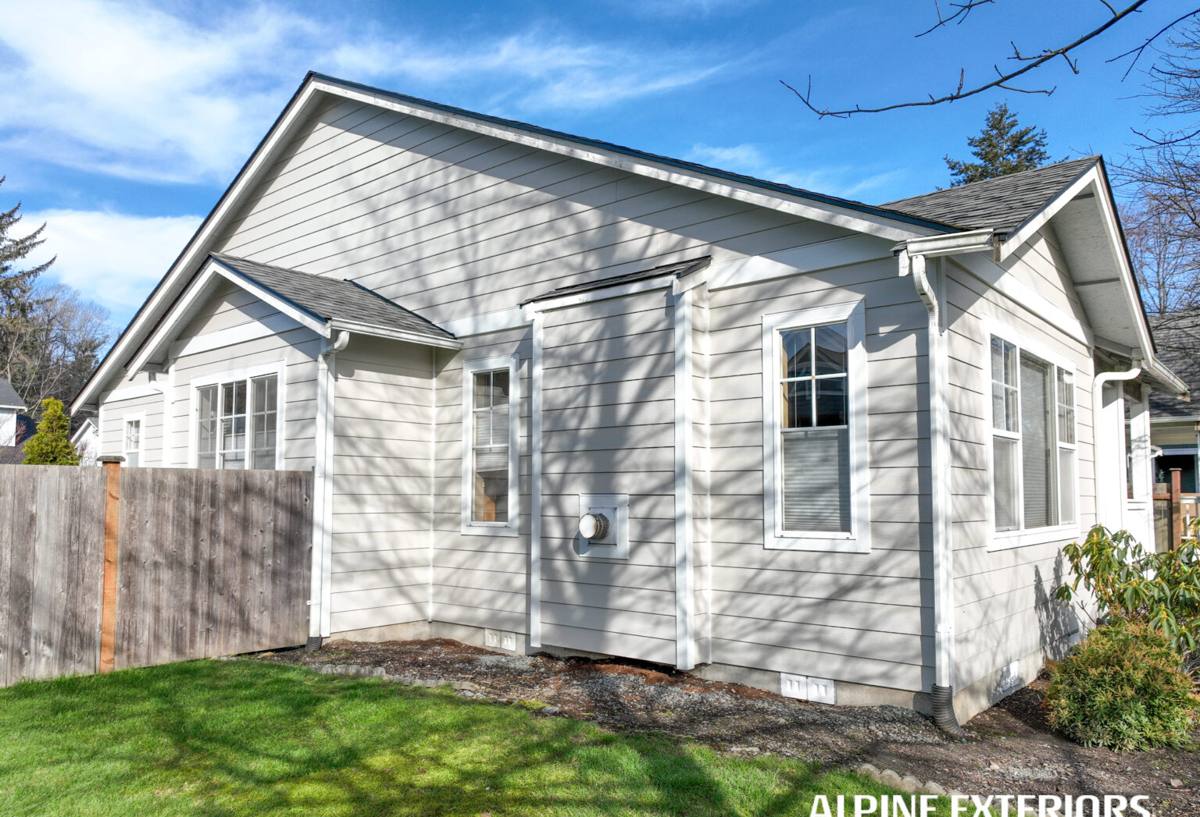
What's Actually Damaging Roofs in This Part of Skagit County
Roof problems in Bow rarely start from one dramatic event. Almost always, it's a slow combination of a few specific local conditions working on the roof at the same time.
Salt Air and Corroding Metal
Properties near Samish Bay deal with salt-laden air that reaches further inland than most people expect, and it's hardest on anything metal — flashing, fasteners, vent caps, gutter hangers. A flashing detail that would hold up for decades in a drier inland market can start rusting and losing its seal years sooner out here, and once flashing fails, water has a direct path onto the deck even though the shingles above it look completely fine.
Wind-Driven Rain
Open, exposed lots are common around Bow — farmland and shoreline properties don't have the tree cover and neighboring rooflines that break up wind the way a tighter subdivision does. That means rain gets driven harder against roof planes and up under shingle tabs and flashing laps than it would on a sheltered lot. A roof detail that would never get tested by straight-down rain gets tested constantly by wind-driven rain here.
A Long Moss Season
Shaded and north-facing slopes hold moisture long enough for moss to establish itself and keep coming back season after season. Moss doesn't just sit on top of the shingle — its rhizoids work down into the granule layer, and as it grows it can lift shingle edges just enough to let wind-driven rain get underneath. Left alone through enough wet seasons, moss turns from a cosmetic issue into the actual cause of a leak.
Common Roof Repairs We See in Bow
Most repair calls we get in this area fall into a handful of recurring categories. Knowing which one matches what you're seeing helps set realistic expectations before anyone gets on the roof.
| What You're Noticing | Likely Cause | Typical Repair |
|---|---|---|
| Ceiling stain near a chimney, skylight, or wall line | Failed or corroded flashing at a penetration or transition | Remove and rebuild the flashing detail; caulk alone is a temporary fix, not a repair |
| Leak that shows up only during hard, wind-driven storms | Rain forced under shingle edges or lapped underlayment at a vulnerable seam | Reset or replace the affected shingle course and underlayment section |
| Heavy moss on part of the roof, with soft spots nearby | Moss holding moisture against the deck long enough to start rot underneath | Moss removal plus targeted deck and shingle repair at the affected section |
| A few shingles missing or visibly lifted after a windstorm | Wind uplift, sometimes worse on exposed or elevated lots | Replace missing shingles and reset fastening on adjacent courses |
| Rusty streaking below a vent, flashing edge, or fastener | Salt-air corrosion on lower-grade or aging metal | Replace the corroded component with corrosion-resistant material, not a re-caulk |
A written estimate should tell you which of these it's actually addressing, not just say "roof repair" as a single line item. If a contractor can't explain what's failing and why, it's worth getting a second opinion before anyone starts working on the roof.
What a Correct Repair Actually Involves
A roof repair that holds up in this climate is more than covering a visible symptom. It means finding the actual point of failure and fixing it as a system, not just patching the spot where water happens to be showing up inside the house.
Finding the Real Source, Not Just the Visible Leak
Water travels before it shows up as a stain. A ceiling leak near one wall can trace back to a flashing failure several feet away, higher up the roof plane. That means a repair should start with tracing the path of the water — on the roof and in the attic if there's access — rather than assuming the leak originates directly above the stain.
Rebuilding Flashing Instead of Caulking Over It
Caulk is not a flashing repair. It's a short-term seal that fails again, often within a season or two, especially once salt air has already started working on the metal underneath. A proper repair removes the failed flashing and rebuilds the detail — correctly lapped, integrated with the underlayment — so the fix is structural, not cosmetic.
Matching Shingles Honestly
On an older roof, an exact color and profile match isn't always available, since manufacturers change product lines and color runs over time. A contractor who's upfront about that before starting the work is doing you a favor; one who promises a perfect match on a ten-year-old roof usually isn't being straight with you.
Removing Moss the Right Way
Pressure washing strips granules and shortens the life of the shingle it's supposed to be protecting. Moss removal that actually helps a repair last involves manual or low-pressure clearing, treatment to slow regrowth, and attention to why that section stays wet longer than the rest of the roof in the first place — often a shade or airflow issue that's worth addressing at the same time.
Checking Deck Condition at the Repair Site
Any time shingles come off for a repair, it's worth confirming the decking underneath is solid before new material goes back down. Soft or delaminated sheathing found during a repair is far cheaper to address right then than after it's been sealed back up under new shingles.
Is This a Repair, or Is It Time to Talk About Replacement?
Not every roof problem in Bow calls for a full replacement, and not every leak is fixable with a small repair either. A few honest questions usually point to the right answer.
- Is the damage isolated to one area — a valley, a boot, a single flashing detail — or spread across multiple roof planes?
- Is this the first repair on this section, or the third time water has shown up in roughly the same spot?
- Is the roof still well within its expected lifespan for the material, or already past it?
- Is the deck underneath solid, or soft and showing signs of ongoing moisture damage?
- Can the existing shingle product still be matched reasonably, or has it been discontinued?
A roof that's a handful of years old with one damaged flashing detail is almost always a repair. A roof with moss embedded across several slopes, a history of recurring leaks, and decking that's starting to soften is telling you the repairs are running out of road. An honest contractor will tell you which situation you're actually in rather than defaulting to whichever answer is more profitable.
How Our Repair Process Works
- In-person inspection: We get on the roof and, where there's access, check the attic too, rather than quoting a repair from a description over the phone.
- Straight explanation of the cause: Before we talk about the fix, we explain what's actually failing and why — flashing, underlayment, moss damage, wind uplift, or something else.
- Written estimate: A clear scope covering exactly what's being repaired, what materials are involved, and what it costs — not a single vague line item.
- The repair itself: Failed components get removed and rebuilt correctly, not caulked over or covered up.
- Deck check at the repair site: Any area we open up gets checked for hidden moisture damage before new material goes back down.
- Final walkthrough: We show you what we found and what we did before we call the job finished.
Why a Crew That Already Works in Bow Matters
A crew that regularly handles roof repair around Bow has already seen which flashing details fail first near the water, how far salt air actually reaches inland on an exposed farmland or shoreline lot, and which roof orientations hold moss longest through the wet season. That's practical knowledge that shows up in small decisions during a repair — which corrosion-resistant fasteners to use, where to expect a second problem hiding near the visible one, how a specific roof orientation in this stretch of Skagit County tends to fail. A crew unfamiliar with this specific area is more likely to treat the job as generic, and generic repairs tend to be the ones that need doing again within a year or two.
It also matters once the work is done. A repair warranty only means something if the company behind it is still reachable locally down the road, not a crew that worked the area once during a busy season and moved on.
What to Check Before Hiring for Roof Repair
- Does the estimate name the actual failure point, not just "roof repair" as one vague line?
- Does the scope include flashing rebuild where needed, not just caulk and a shingle swap?
- Will they check deck condition at the repair site before closing it back up?
- Do they carry current Washington contractor licensing, liability insurance, and workers' compensation?
- Can they point to recent, real repair work in or near Bow and the surrounding Skagit County area?
- Is the workmanship warranty on the repair spelled out separately from any manufacturer material warranty?
After the Repair: Keeping It From Happening Again
A good repair fixes today's leak. A few habits keep the next one from starting on schedule. Clearing moss and debris from valleys and shaded slopes before it builds up matters more here than in a drier climate, since moss regrows quickly in Skagit County's damp conditions once it's established. Keeping gutters clear prevents water from backing up under the roof edge during heavy rain. And a look at attic ventilation, if you haven't had one recently, is worth doing — poor airflow traps moisture against the underside of the deck and can undo the benefit of a well-done repair over time. None of this is expensive or complicated, but it's the difference between a repair that lasts and one that's just buying time.
If you're dealing with a leak, a damaged section, or just want an honest read on whether your Bow-area roof needs a repair or something bigger, we're glad to come take a look. Use the form below to request a free, no-pressure estimate.