 Anacortes
 Roofing on the Water's Edge: Why Flounder Bay Is a Different Job
Flounder Bay sits right up against the marine environment that makes Fidalgo Island beautiful and makes roofing here harder than it looks from the ground. Homes tucked close to the water take a steady diet of salt-laden air, wind-driven rain off Rosario Strait, and the kind of shaded, damp microclimate that keeps moss growing nearly year-round. An asphalt shingle roof that would coast along fine twenty miles inland can start showing granule loss, moss colonies, and soft flashing within a few seasons if it wasn't built and maintained with this specific exposure in mind.
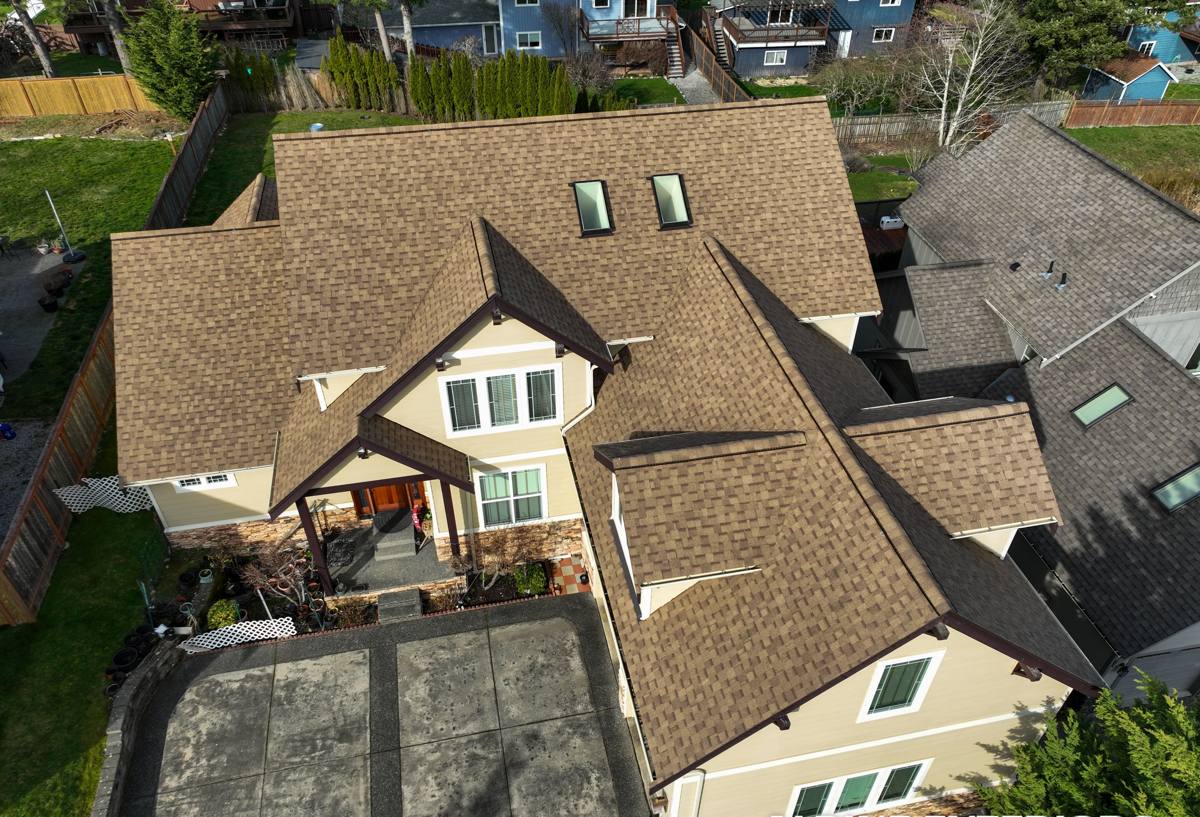
We work asphalt shingle roofs in the Flounder Bay area regularly, and the pattern is consistent: the roofs that hold up are the ones installed with the right underlayment, the right ventilation, and shingles chosen for a wet, salty, shaded climate — not just whatever was cheapest at the yard. The roofs that fail early almost always trace back to shortcuts in those same three areas.
What Salt Air, Rain, and Moss Actually Do to a Shingle Roof
Salt Air and Metal Components
Asphalt shingles themselves aren't especially vulnerable to salt, but the metal that goes with them is. Nail heads, flashing, drip edge, and roof vents corrode faster near the water than they do inland. Cheap electro-galvanized fasteners and thin aluminum flashing can start pitting and rusting years before the shingles themselves are worn out, and a rusted nail head or a corroded flashing seam is where a leak starts — not usually in the shingle field itself.
Driving Rain and Wind
Anacortes gets plenty of straight-down rain, but the storms that come through Rosario Strait and across Skagit County often push rain sideways for hours at a time. Wind-driven rain finds every gap in a poorly lapped underlayment, every under-nailed shingle, and every rake edge that wasn't sealed properly. On a well-built roof this is a non-issue. On a roof where corners were cut, it's how water gets under the shingles instead of running over them.
Moss and Organic Growth
Flounder Bay's tree cover and marine humidity mean roofs here stay damp longer after a rain than roofs in drier, more open parts of the county. That extended dampness is exactly what moss and algae need to take hold. Once moss roots into a shingle mat, it lifts the shingle edges, holds moisture against the roof deck, and accelerates granule loss — turning a cosmetic problem into a structural one if it's left unmanaged for a few seasons.
What a Correct Installation Looks Like in This Climate
A roof built for Flounder Bay's conditions isn't a different product line, it's the same asphalt shingle system installed with more attention to the details that matter here.
- Ice-and-water barrier at eaves, valleys, and around every penetration — not just the code-minimum strip, but full coverage in the areas most exposed to wind-driven rain
- Synthetic underlayment across the whole deck, lapped and fastened to shed water even if wind gets under the shingle edges
- Balanced ventilation (intake at the eaves, exhaust at the ridge) so moisture from inside the house doesn't condense against the underside of the deck and feed rot or mold
- Corrosion-resistant fasteners and flashing — stainless or heavier-gauge coated metal in the areas most exposed to salt air, especially valleys, chimneys, and skylight curbs
- Algae-resistant shingles with copper- or zinc-infused granules, which slow the moss and algae growth that's constant in this microclimate
- Proper nailing pattern and wind rating matched to actual exposure, not just the minimum the manufacturer allows
Skip any one of these and the roof will likely still look fine on installation day. The problems show up two, five, or ten years later — which is exactly why they're easy for a rushed or out-of-area crew to skip.
Our Process for a Flounder Bay Re-Roof or Repair
1. On-Site Inspection
We look at more than the shingles — deck condition, existing ventilation, flashing at every penetration, and how much moss or algae has already taken hold. Homes near the water often need a closer look at valleys and chimney flashing specifically, since that's where salt-air corrosion shows up first.
2. Honest Scope and Written Estimate
You get a clear breakdown of what's a full replacement, what's a repair, and what's optional. If the deck is sound and the issue is isolated flashing or a wind-damaged section, we'll say so rather than push a full tear-off you don't need.
3. Tear-Off and Deck Inspection
Once the old roofing is off, we inspect the deck for soft spots, rot, or water staining that wasn't visible from above — common where moss has been holding moisture against the roof for years. Any damaged sheathing gets replaced before anything new goes down.
4. Underlayment, Flashing, and Shingle Installation
Ice-and-water barrier, synthetic underlayment, new flashing, and the shingle system go on in that order, with attention to the nailing pattern and lap details that matter most in wind-driven rain.
5. Ventilation Check and Cleanup
We confirm intake and exhaust venting are balanced, then do a full site cleanup — magnetic sweep for nails included.
Choosing an Asphalt Shingle for a Marine Environment
Not every asphalt shingle line handles salt air and moss exposure the same way. The table below is a general guide to how the common categories compare for a Flounder Bay-type site — actual pricing depends on the specific product line, roof complexity, and current material costs.
| Shingle Type | Moss/Algae Resistance | Wind Rating (typical) | Relative Cost |
|---|---|---|---|
| Standard 3-tab | Low unless algae-resistant granules added | 60–70 mph | Lowest |
| Architectural (laminated) | Moderate to good with AR granules | 110–130 mph | Mid-range |
| Premium/designer architectural | Good, usually includes enhanced algae resistance | 130+ mph | Highest of the asphalt lines |
For most Flounder Bay homes, we steer clients toward an architectural shingle with algae-resistant granules and a wind rating that matches actual site exposure. It's a reasonable middle ground: meaningfully better moss resistance and wind performance than 3-tab, without moving into a different roofing material altogether.
Cost Factors Worth Knowing
Beyond the shingle line itself, a few things move the price on a Flounder Bay job more than they would inland:
- Roof pitch and access — steeper roofs and limited staging area near the water add labor time
- Deck condition — moss-related moisture damage sometimes means more sheathing replacement than expected
- Flashing scope — chimneys, skylights, and valleys near salt air often benefit from upgraded metal, which adds material cost but reduces future maintenance
- Tree cover — heavy overhang may mean trimming back branches before or after the job to slow future moss growth
Maintenance That Actually Matters Here
A correctly installed roof still needs some upkeep in this climate — the difference is how much and how often. Here's a realistic maintenance checklist for a Flounder Bay asphalt shingle roof:
- Check for moss buildup at least once a year, more often under heavy tree cover
- Remove moss with a gentle method (low-pressure rinse or approved treatment) rather than scraping, which damages granules
- Clear gutters and valleys of needles and debris before the fall rains set in
- Have flashing and fastener condition checked every few years, especially on homes with direct water exposure
- Trim back overhanging branches that keep sections of the roof shaded and damp
- Address any lifted or missing shingles quickly — a small gap becomes a bigger leak fast in driving rain
Why Local Experience in Flounder Bay Matters
A roofing crew that hasn't worked near Anacortes' waterfront neighborhoods before is guessing at exposure levels, flashing needs, and how aggressive the moss season really is here. A crew that already works Flounder Bay knows which parts of a roof take the worst of the wind-driven rain, which fastener and flashing upgrades are worth the extra cost, and which shingle lines actually hold up under Skagit County's wet, salty conditions rather than just looking good in a brochure. That local pattern-recognition is what keeps a roof performing for its full expected lifespan instead of needing early repairs.
Get a Straight Answer on Your Flounder Bay Roof
Whether you're dealing with visible moss, a few missing shingles after a windstorm, or you're just planning ahead for a roof that's getting close to the end of its life, it helps to have someone look at it who knows this specific stretch of Anacortes. We offer free, no-pressure estimates — fill out the form below and we'll take a look and give you an honest read on what your roof actually needs.